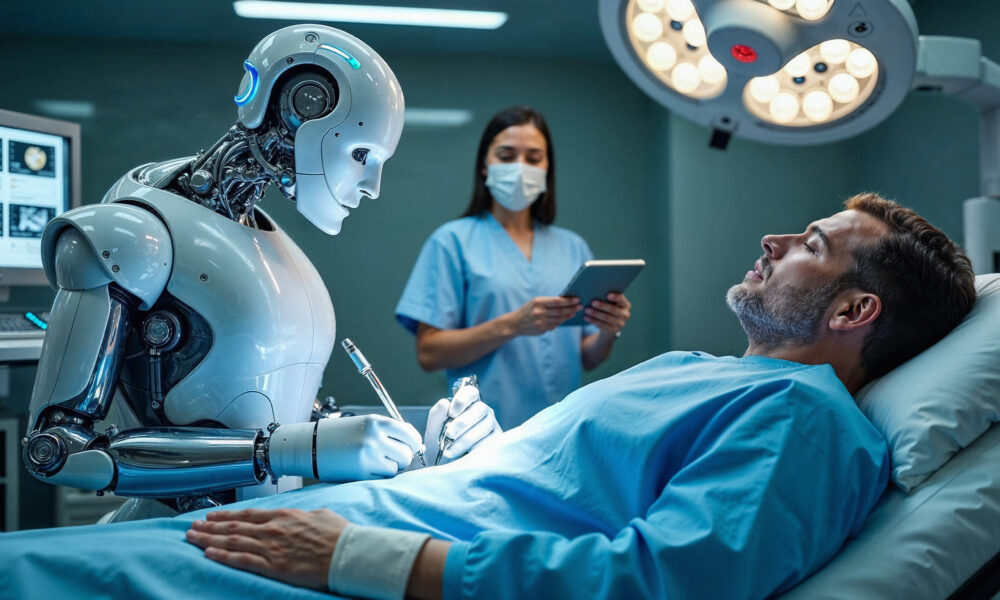
From hospitality & customer service to healthcare providers and scientists - the 12 jobs AI cannot take over


ARTIFICIAL Intelligence is rapidly becoming a huge part of all of our lives. From using chatbots as online therapists to fully automated homes thanks to services like Alexa, people have discovered countless ways to integrate AI into their daily routines. When you have technology capable of scouring the entire internet within seconds and delivering cohesive responses, it can be difficult to imagine a future where jobs remain secure. But despite AI's remarkable capabilities, there are certain professions that simply cannot function without human involvement. Jobs rooted in creativity, empathy, and human judgement are still expected to flourish in this era. Here, reporter EMMA KILCAWLEY HEMANI takes a look at the professions that are expected to withstand the technological revolution according to LiveCareer UK. 1. HEALTHCARE PROFESSIONALS In healthcare, hands-on physical work coupled with empathy and trust are indispensable. Health and recovery are unpredictable, and when unforeseen situations arise that cannot be automated, human judgement informed by medical expertise becomes crucial. The essential qualities required in healthcare, compassion, medical knowledge, and adaptability ensure that this field will remain firmly in human hands. 2. CREATIVE PROFESSIONALS Artificial Intelligence lacks the originality and imagination needed to replace creative individuals. Studies have shown that original expression, cultural nuance, and innovation stem from human imagination rather than algorithms. Creativity, storytelling expertise, and cultural awareness are vital for these roles - and this is where AI falls short. 3. SKILLED TRADES Skilled trades require real-world problem-solving, on-site decision-making, and dexterity - qualities that demand human flexibility. The technical knowledge, manual skills, and situational judgement possessed by humans cannot be replicated by AI. 4. EDUCATORS AND TRAINERS Teachers do more than impart knowledge as they inspire, mentor, and nurture students. While it is easy to search for information online or ask AI systems like ChatGPT, these methods lack the inspiration and personal connection that educators provide. Communication, empathy, and adaptability are core strengths that ensure teaching remains a human endeavour. 5. UPPER-LEVEL STRATEGISTS AND ANALYSTS Strategic roles require context, judgement, and decision-making in uncertain environments are qualities AI is incapable of replicating. Strategic thinking, interpretation, and leadership remain essential human skills in these professions. 6. RESEARCH SCIENTISTS AND ENGINEERS Innovative breakthroughs and experiments often arise from human curiosity - a trait machines cannot emulate. While AI might assist with investigative work, it lacks the curiosity and critical thinking necessary to initiate such endeavours. 7. CUSTOMER SERVICE REPRESENTATIVES People who work in customer service need to be prepared for anything, with problem-solving skills that offer more than scripted chatbot responses. This, paired with authentic empathy, leads to a rounded customer service experience. AI doesn't have the core strengths, including emotional intelligence, listening and problem-solving to take over the role. 8. JUDGES AND LEGAL PROFESSIONALS When making decisions, it's not only the law that comes into it. Applying justice requires weighing ethics - which needs human reasoning and fairness. AI would not be able to have the analytical thinking, advocacy and ethical judgement to make these decisions. 9. LEADERSHIP AND MANAGEMENT ROLES To work in a managerial role, you require vision, leadership and decision-making skills. Being able to make decisions in uncertain environments is fundamentally a human skill. AI isn't capable of having strategic, risk-taking and leadership skills to complete the job on its own. 10. SOCIAL WORKERS AND MENTAL HEALTH PROFESSIONALS People who work in these sectors need a large amount of empathy and human connection. They require trust from their clients, emotional care and interpersonal skills when supporting vulnerable people. AI would not be able to do these jobs, as while it can give advice, it lacks the ability to connect with humans on an emotional level. 11. ENVIRONMENTAL AND SUSTAINABILITY EXPERTS Ethics, environmental expertise and big-picture analysis are fundamental when it comes to these jobs. Tacking climate challenges cannot be done without ethical oversight, systems thinking and human accountability. Therefore, AI isn't capable of doing it alone. 12. HOSPITALITY AND CARE SECTOR STAFF This is another area where interpersonal skills and genuine empathy are unmatched. Workers require genuine warmth and the ability to create personal experiences which can only come from people. This, alongside the need for adaptability, service orientation and emotional intelligence is the reason why AI would not be able to take it over.
Source: The Irish Sun