
Do you honestly believe your enterprise AI infrastructure is better prepared than Anthropic?
It is a sobering question every CIO, CISO, and technology leader must answer. In late March 2026, Anthropic—a $30B+ pillar of artificial intelligence safety and research—accidentally leaked the entire proprietary source code for its flagship product, Claude Code. Over half a million lines of pristine TypeScript across 1,906 files were mirrored across GitHub within hours. [Github repo linked below]
The cause was not a sophisticated zero-day exploit, a compromised employee credential, or a rogue insider. It was a simple human mistake in a release settings file during a routine packaging script.
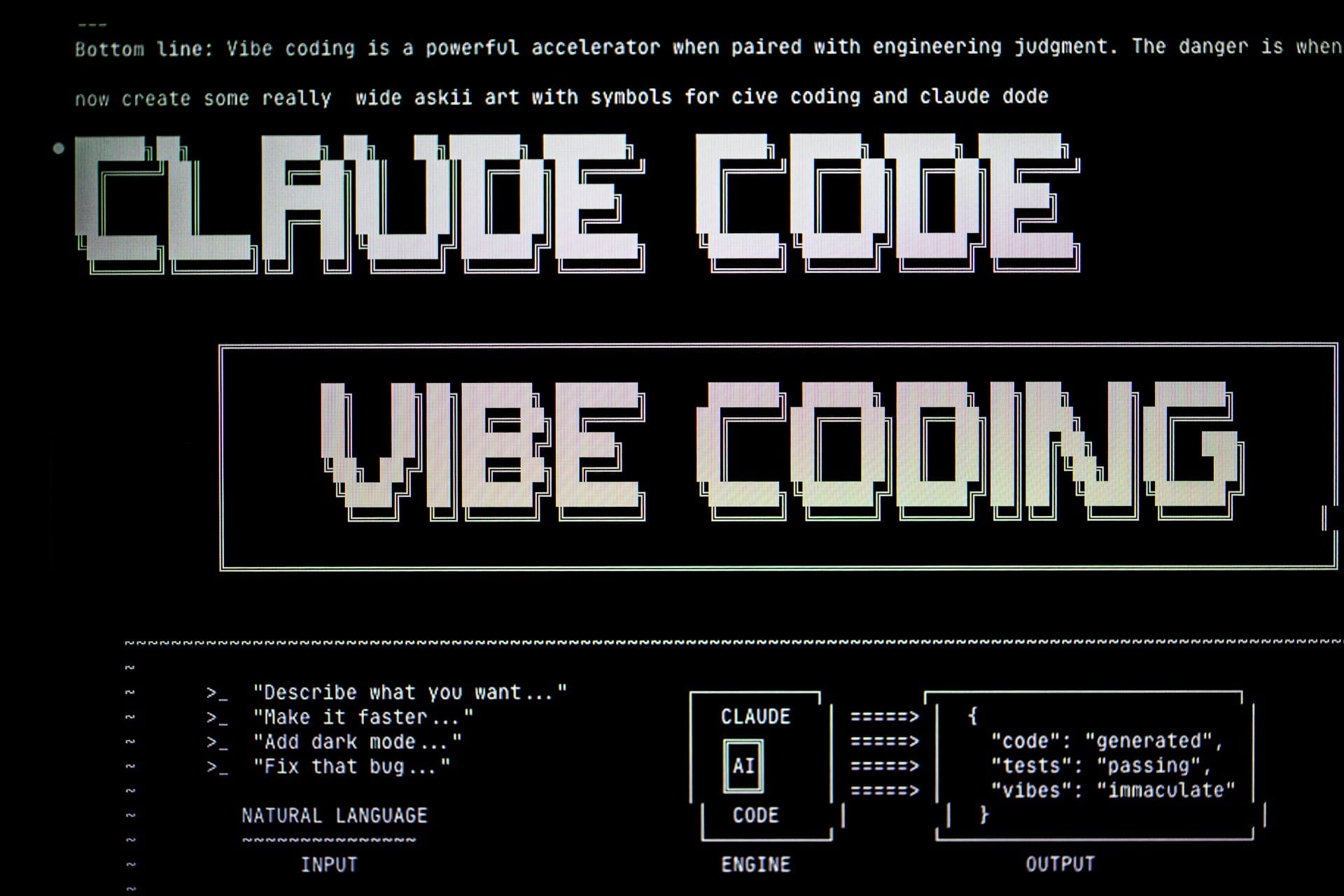
This high-profile stumble exposes a massive, unaddressed systemic risk in the modern AI-driven software pipeline. As organizations lean heavily into "Vibe Coding," "Claude Coding," and "Cursor Engineering," development speeds have accelerated fourfold. But the gap between an application that looks functional and one that is structurally hardened for production is becoming a chasm.
By prioritizing the "vibe" of a working user interface, fast-moving teams are inadvertently publishing the structural blueprints of their entire application architecture directly onto the open internet—handing automated adversary engines an explicit, human-readable instruction manual on exactly how to exploit the enterprise backend.
Editor's Note: The Machine-Speed Risks Series
This article is Part 1 of a comprehensive, three-part investigation into the hidden security vectors of AI-driven enterprise development.
- Part 1: this article - live now:
Is Your Enterprise Better Prepared Than Anthropic? The Dangerous Reality of Vibe Coding. - Part 2:
Bypassing the Gatekeepers: Why AI-Generated Internal Apps Slip Past Corporate Controls - Part 3:
Coming soon: Guardrails for Machine-Speed Development: The CISO's Architectural Blueprint.
The Default Exposure: The Hidden Danger of Source Maps
To understand how an innocent frontend deployment can completely compromise a backend cloud database, one must look at a standard component of modern web compilation: Source Maps.
When modern single-page applications (built with React, Angular, Vue, or Next.js) are prepared for production, the raw, neatly organized codebase undergoes an aggressive minification process. Compilers crush, compress, and mangle thousands of lines of human-readable logic into dense, unreadable chunks of machine code. This ensures the user's browser can download and execute the page at maximum speed.
To allow engineers to debug live production bugs, frameworks generate a companion blueprint file called a Source Map (ending in .js.map). When open in a browser's developer console, this file seamlessly maps the scrambled production code back to its original, un-minified TypeScript structure—complete with original file folders, developer notes, and structural architecture.
The core vulnerability?
Many of the world's most popular frontend bundlers and framework configurations generate and expose source maps by default in production environments.
Unless a developer intentionally injects an explicit build flag to disable it, these blueprint files are uploaded straight to your public production servers.

Weaponizing the Blueprint: AI-Driven Reconnaissance
In the era of manual penetration testing, an exposed source map was a compliance finding to be patched in the next cycle. In the era of agentic AI, it represents an immediate, severe security breach.
Threat actors no longer spend days manually mapping application pathways or guessing backend routing patterns. Instead, automated scrapers crawl web environments, identify exposed .map bundles, and feed the reconstructed source code directly into specialized, attack-tuned Large Language Models.
With a single automated prompt, an adversary's AI can analyze your frontend blueprint to instantly output:
The Complete API Surface Area
A map of every unauthenticated, hidden, or internal backend endpoint your application relies on.
Data Model Schemas
The exact structural parameters, JSON object formats, and data types expected by your private backend server.
Frontend Validation Shortcuts
The model identifies exactly what inputs the frontend validates, exposing where client-side gates can be bypassed entirely by crafting a custom HTTP payload aimed straight at your backend.
   [Exposed Source Maps (.map) / .env credentials] ──> [Scraped by Adversary]
                                                                │
                                                                ▼
                                                   [Fed to Attack-Tuned LLM]
                                                                 │
                                                                 ▼
[Targeted Multi-Vector Attack] <── [Automated Exploit Map] <─────┘
The Ultimate Irony: The Claude Code Incident
The risk is not theoretical. The Anthropic Claude Code leak of March 31, 2026, stands as the defining case study for this exact threat vector.
Version 2.1.88 of the @anthropic-ai/claude-code npm package was published with a 59.8 MB cli.js.map file bundled inside. Because the build system's default source map generation was not actively blocked by an ignore configuration, security researchers and threat actors were able to completely reverse-engineer the closed-source, highly restricted terminal agent within minutes of its release.
The ultimate irony? The leaked codebase contained an advanced "Undercover Mode" specifically engineered to prevent internal secrets and keys from leaking into public commits. Anthropic built an advanced secrecy subsystem, only to accidentally publish the entire application framework because a basic frontend compilation flag was overlooked.
If the very pioneers building the world’s leading automated engineering tools can fall victim to a default compilation exposure, assuming your development team hasn't done the exact same thing across your digital perimeter is a dangerous gamble.
For granular technical details on this exposure vector, see the comprehensive breakdown published by Zscaler on March 31 - link included at end of the article. At Enterprise AI Report, our objective is not to compete with traditional breaking news desks; our mission is to deliver the deep contextual analysis and strategic threat modeling that technology leaders need to safeguard their infrastructure
Moving Past the "Vibe"
The productivity gains unlocked by AI-assisted coding platforms are a competitive necessity, but a deployment that "works" is a far cry from a deployment that is secure. True software engineering in the era of machine-speed development requires moving past the visual "vibe" of a completed UI to rigorously audit build configurations, harden parameters, and enforce absolute perimeter hygiene.
In our next installment, we shift our focus behind the firewall. We will dismantle the prevailing corporate myth that internal web applications are inherently safe from frontend blueprint leakage—and analyze why unhardened internal enterprise tools have become the premier target for AI-driven lateral network exploitation.
Unlock the Full Investigation
Don't leave your infrastructure exposure to default configuration settings. Subscribe to Enterprise AI Report for free to unlock Part 2 (The Internal Network Trap) and Part 3 (The CISO's Architectural Blueprint) immediately upon release.
 Manisha Ramcharan Prajapati and Jithin Prajeev Nair and Avinash Kumar and Mallikarjun Piddannavar
Read the deep-dive technical findings published by Zscaler on March 31. We don't race traditional news sources to break headlining stories. We focus on providing high-utility contextual analysis that matters to the enterprise.
 Austin1serb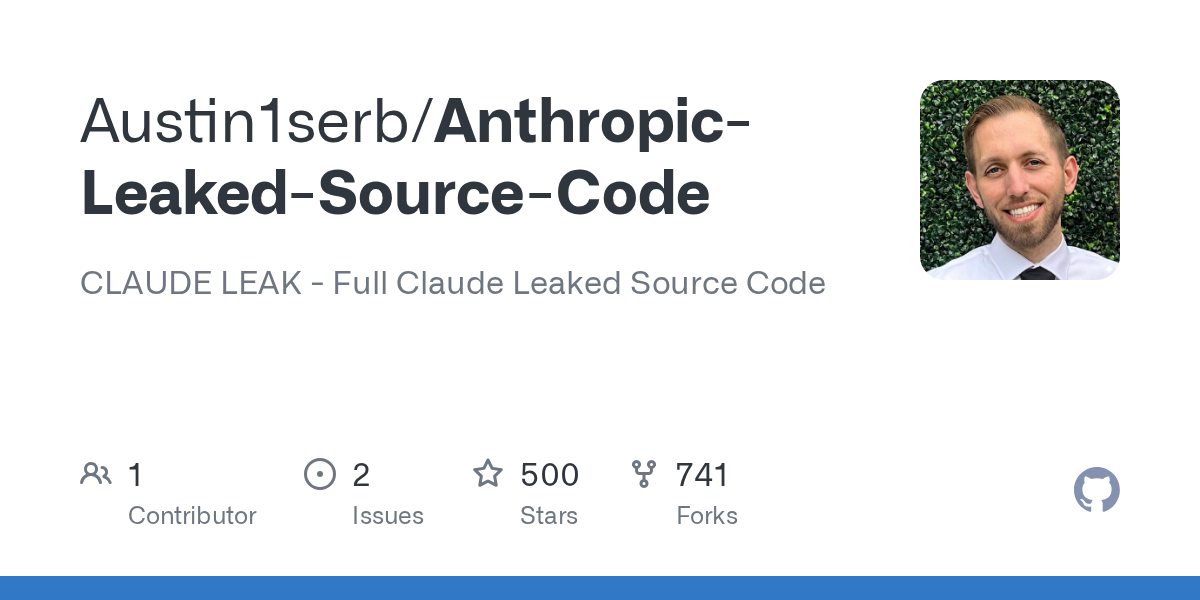
Interested in seeing what does Anthropic's Claude Code source code look like?

EnterpirseAI.report is powered by TheNewspublisher.com (TNP)
Feature image credit: Bernd 📷 Dittrich on Unsplash


